Most height “illusion” tricks don’t come from loud fashion statements, they come from tiny measurements. Pant length is one of the strongest levers you can pull because it controls where the eye thinks your legs begin and end. A half-inch too long can bunch and visually compress you; a half-inch too short can slice your silhouette in the wrong place. The goal isn’t to chase a rigid rule, but to choose proportions that keep your outline clean from waist to shoe.
Where the eye measures your height
People don’t consciously calculate seams; they scan lines. The vertical line from waistband to toe is your visual ruler, and any interruption, folds, breaks, or pooling or harsh contrast creates “stops” that shorten the read. In the middle of all this, styling mistakes with men’s pants often show up as innocent decisions: a hem that collapses, a rise that sits oddly, or shoes that fight the leg line instead of extending it.
Hem length and the “break” effect
The “break” is the bend or fold that forms where your pant meets the shoe. A heavy break, especially with extra fabric stacking on the vamp, makes your lower leg look crowded and shorter because the eye lingers on the mess. A cleaner, lighter break keeps the fabric draping straight so the leg looks longer. If you want to appear taller, aim for a hem that kisses the shoe with minimal folding neat enough to look intentional, relaxed enough to avoid looking shrunken.

Pooling at the ankle: the silent height thief
When fabric puddles around the ankle, it adds width and reduces the sense of lift. The silhouette becomes bottom-heavy, and even premium trousers can look sloppy. This is one of the most common styling mistakes with men’s pants because it feels safer to leave “extra length” than risk a high hem. In reality, the extra cloth behaves like visual drag: it breaks the line and makes your shoes look smaller, which further reduces perceived height.
Cropped looks and the ankle “cut.”
Shorter hems can make you look taller when done with a plan but they can also backfire by chopping the leg line. If the hem stops at an awkward point (mid-ankle) and exposes a stark sock contrast, your eye reads a hard horizontal stripe. The best version is deliberate: a hem that sits cleanly above the shoe with a smooth taper, paired with socks that don’t create a loud division. This keeps the ankle reveal from acting like a visual “speed bump.”
Taper and leg opening: the frame around your shoes
Pant length doesn’t work alone; it’s supported by the width of the leg opening. If the opening is too wide, the fabric collapses and creates more folds, which shortens you. If it’s too narrow, it can ride up and exaggerate shortness when you sit or walk. The most flattering middle ground is a leg opening that skims the shoe without swallowing it. As a practical check, your hem should fall cleanly when standing still and should not climb dramatically with a single step.
Rise placement changes the leg ratio
A pant can be the correct length and still make you look shorter if the rise is fighting your proportions. A low rise visually lowers the starting point of your legs, making the torso seem longer and the legs seem smaller. A moderate rise that sits comfortably near your natural waist often improves the leg-to-torso ratio, especially when the shirt is tucked or half-tucked. Think of rise as the “top anchor” of your height illusion: it decides where your legs begin in the viewer’s mind and when combined with men’s color styling that keeps the waist-to-leg line visually uninterrupted, the overall silhouette reads longer and cleaner.
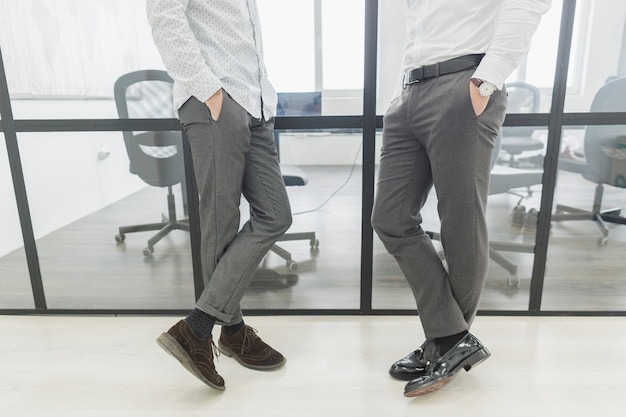
Fabric weight and drape decide how the length behaves
Two pants with the same inseam can look totally different based on cloth. Lightweight fabrics can cling and crease sharply, creating random lines that interrupt height. Heavy fabrics can pool if the hem is even slightly long. A good drape hangs straight, allowing the leg to read as one continuous column. If you’re aiming for a taller look, choose materials that fall smoothly and recover shape after movement, and avoid overly stiff fabrics that form bulky breaks at the shoe.
Shoes, socks, and color flow matter more than most people think
Footwear is the finish line of your pant length story. A bulky shoe combined with a long hem can create thick folds and shorten you; a sleek shoe can help the fabric fall cleanly. This is where smart pants choices become practical: pick shoes that match the formality and structure of your trousers so the hem sits as designed. For color, keep transitions subtle high-contrast socks can split the leg in two, while a smoother palette supports height; careful men’s color styling can quietly extend your silhouette without looking forced.
Conclusion
Pant length is less about rules and more about clarity: the cleaner the line, the taller you tend to look. Get the hem right for the shoes you actually wear, check the break while standing naturally, and pay attention to how the fabric behaves when you move. Small tailoring tweaks usually outperform expensive wardrobe overhauls because they directly improve proportion. When your trousers hang straight and uninterrupted, your entire outfit reads sharper, longer, and more confident.
 Site Title
Leave a comment